Related reading: Bitcoin 20 Million: Why This Threshold Matters Now · Kraken Fed Access: What Changes for Crypto Payments
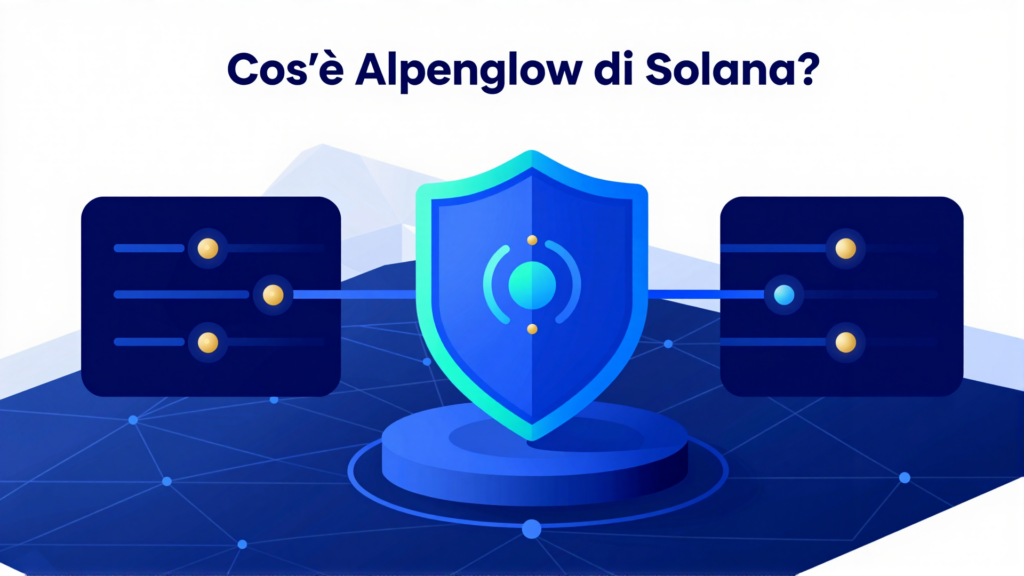
What is Solana’s *Alpenglow* (and why is it such a hot topic)?*Alpenglow* is an upgrade that fundamentally rewrites Solana’s consensus mechanism. The proposal was approved with overwhelming community support, marking the green light for the largest technical transformation in the network’s history.Alpenglow replaces two historical pillars—TowerBFT (finality) and Proof-of-History (distributed clock)—with two new components: Votor and Rotor. The goal is to reduce transaction finality to approximately 150 milliseconds, drastically improving responsiveness and predictability of confirmation times.—
Finality, Latency, and Throughput* **Finality:** The moment a transaction becomes irreversible.
* **Latency:** The time between sending and final confirmation.
* **Throughput (TPS):** The number of transactions processed in a given interval.Alpenglow primarily focuses on finality and latency. While throughput remains important, the user experience largely depends on how quickly an operation becomes final.—
The Architecture of AlpenglowVotor: The New Voting and Finality Engine* Replaces TowerBFT.
* Finalizes in 1 round if at least 80% of the stake is online.
* Finalizes in 2 rounds if at least 70% participates.
* Ensures security and speed, with fewer messages and less delay.Rotor: The New Data Highway* Replaces Proof-of-History in the role of propagation.
* Distributes blocks and votes more quickly and evenly.
* Keeps validators synchronized in near real-time.—
What Changes for Users and Developers* **Near-instant confirmations:** Finality in 150ms, similar to the speed of Web2.
* **Stable predictability:** Useful for payments, trading, and time-sensitive applications.
* **Fewer rollbacks:** Reduced chance of a confirmed transaction being reorganized.
* **New dApps:** Real-time games, social media, and other applications become possible on the blockchain.—
Impact on Validators* **Voting pace:** Low latencies and optimal configurations are needed to achieve the fastest performance.
* **Networking:** Peering quality and network topology are more critical than ever.
* **Observability:** Metrics like “propagation time” and “voting punctuality” become essential.
* **Rewards:** Voting punctuality may influence operator rewards.—
Security and Fault ToleranceAlpenglow maintains the guarantees of distributed consensus security. Even with unreliable validators, the network can finalize blocks. The new design is intended to ensure robustness and operational continuity even in complex scenarios.—
Limitations and Challenges* **Client monoculture:** As long as the majority uses a single client, bugs or errors can affect the entire network.
* **Dependence on validator operability:** Latencies and network instability become more critical.
* **Network outages:** Not completely eliminated, but reduced.—
Firedancer: The Next StepTo improve resilience and diversification, Firedancer, a new client developed by an independent team, is expected. This will reduce the risk of relying on a single software, increasing overall security and scalability.—
ConclusionAlpenglow is a radical change for Solana:* Ultra-fast finality in 150ms.
* Increased efficiency for validators and developers.
* New opportunities for real-time Web3 applications.
* A more resilient future thanks to the arrival of alternative clients.It’s not a “magic” upgrade that solves every problem, but it marks the beginning of a new phase for the Solana blockchain, bringing it closer to offering Web2-like performance in a decentralized environment.