Related reading: Bitcoin 20 Million: Why This Threshold Matters Now · Kraken Fed Access: What Changes for Crypto Payments
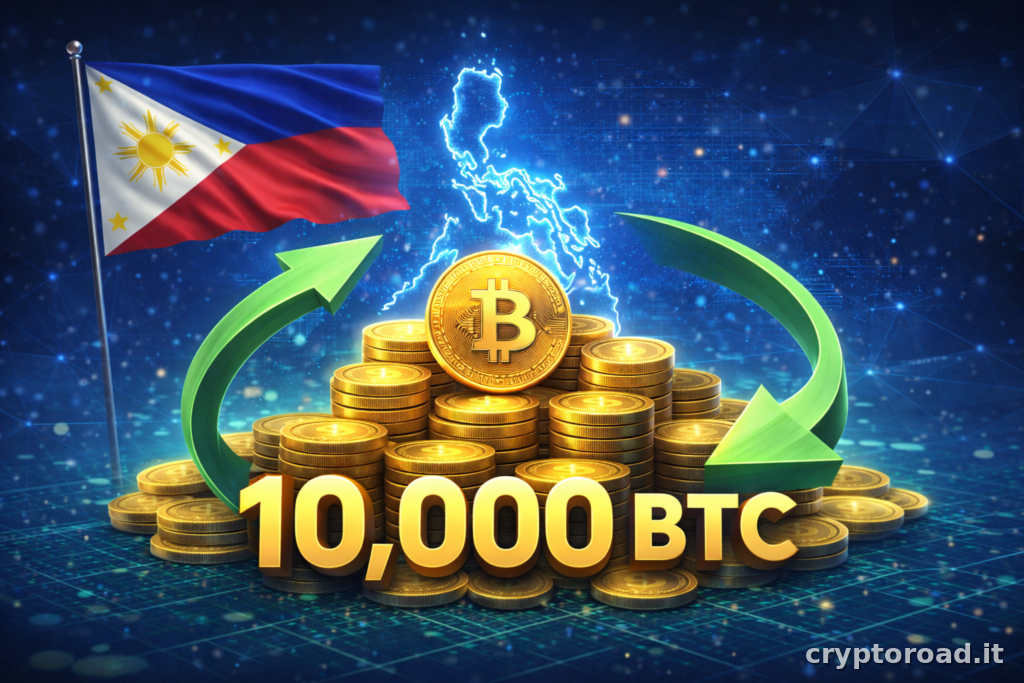
The Philippine Congress is considering a bill to create a strategic reserve of **10,000 Bitcoin**, a bold step towards recognizing BTC as a sovereign asset. The bill, presented in June by Representative Migz Villafuerte (Camarines Sur), proposes that the **Bangko Sentral ng Pilipinas (BSP)** purchase **2,000 BTC per year for five years**. The total value of the reserve, at the current exchange rate, is estimated at approximately **$1.1 billion**.The reserve would be deposited in a trust fund with a minimum lock-up period of **20 years**: the BTC cannot be sold, exchanged, or disposed of, except in the event of public obligations such as reducing state debt.Villafuerte stated that “acquiring strategic assets like BTC is vital… to ensure the financial stability of the country.” He also described Bitcoin as a form of “digital gold,” highlighting its average annual growth of 40% over the past five years and its growing role in global markets. The bill is inspired by similar initiatives in countries such as El Salvador.The proposed text includes a **proof-of-reserves** system: each quarter, the governor of the BSP must publish official and verified data on the reserve—details on holdings, transactions, and custody of private keys—to ensure transparency and accountability.If approved, this initiative would make the Philippines the first Asian country to legislate a sovereign Bitcoin reserve, surpassing El Salvador (6,276 BTC) and approaching the holdings of Bhutan (approximately 10,565 BTC). The proposal is part of a broader global trend to recognize BTC as a reserve asset and a tool for financial diversification.* **10000 BTC**: total value of the strategic reserve (approximately $1.1 billion)
* **2,000 BTC/year**: accumulation mechanism for five years
* **20 years**: minimum lock-up duration
* **Quarterly proof-of-reserve**: guaranteed transparencyThe *Strategic Bitcoin Reserve Act* could mark a turning point for Asian monetary policies, signaling a concrete step towards institutional adoption of BTC. The Philippines is positioning itself as a potential model for other governments seeking digital assets to strengthen their financial stability.
